Network time synchronization is critical for many organizations. A robust source of accurate time is of utmost importance. Here are a few factors to consider when purchasing a commercial NTP server:
- Choice of reference clock, GPS or Multi-GNSS.
- Polling frequency and the number of network time clients that can be synchronized.
- Timing accuracy, how tightly an appliance can synchronize to UTC.
- Holdover, how long a device can maintain accurate time in the event of GNSS signal loss.
- Ethernet port speed for connecting to the latest switches.
- Redundancy and peering to build a robust source of accurate time.
- Security features, such as SSH, SSL and authentication.
- Automatic leap second insertion.

NTP Overview
Network Time Protocol (NTP) is a networking protocol used to synchronize clocks of computers and devices over a network (LAN or Internet). It ensures that all systems share the same, accurate time.
The key goals of NTP are to provide accurate, consistent time across distributed systems, minimizing clock drift. It can maintain synchronization within microseconds in LAN environments.
NTP uses a hierarchical, layered structure of time sources called a stratum:
- Stratum 0: Highly accurate physical time sources (GPS clocks, atomic clocks).
- Stratum 1: NTP servers connected directly to stratum 0 devices.
- Stratum 2+: Servers that get time from the stratum level above.
Network time clients exchange timestamped packets with NTP servers to calculate and correct any difference between local and server clocks. Complex algorithms adjust for network delays and round-trip time. NTP clients gradually adjusts their clocks to avoid abrupt jumps.
The protocol is also used by a wide variety of network devices including routers, switches, telephone systems, CCTV cameras and Digital Video Recorders (DVR). Many industries, including: Financial, Industrial Control and Telecommunications rely on NTP for logging and event correlation and synchronization of distributed databases.
Synchronized Network Time Is Critical
The coordinated time of computer networks is critical to guarantee the correct sequencing of processes. It is also a vital requirement for correctly logging the time of events.
For many industries, accurate synchronization of computer systems is a legal requirement. For instance, financial trading systems are legally required to very precisely synchronize the real time clocks of their computers.
Many industries also require accurate time stamps to be applied to the occurrence of events. For example, pharmaceutical companies need to log exactly when batches of product are produced.
Security companies have a requirement to coordinate cameras with a legally traceable source of accurate time in order to prove when events took place.
Choosing A Reference Clock – GPS, GNSS and Radio Time Signals
NTP requires an accurate source of time in order to function correctly. Satellite time references include GPS, Galileo, GLONASS, BeiDou, SBAS and QZSS. While radio time broadcasts include WWVB. DCF-77 and MSF.

GPS
The Global Positioning System (GPS) has been the primary source of accurate time for NTP servers for a number of years.
It is a satellite-based navigation system, maintained by the US military, that lets devices determine their exact location (latitude, longitude, altitude) anywhere on Earth and also provide highly accurate atomic time.
The GPS system is usable from any location on the face of the Earth. Reception ideally requires the installation of an antenna with a good view of the sky. Though, reception with a window mounted or even indoor mounted antenna is often feasible. GPS provides consistent timing to nanosecond accuracy.
Galileo
Galileo is the European Union’s global satellite navigation system (GNSS). It provides highly accurate positioning, navigation, and timing services—similar to the U.S. GPS, Russia’s GLONASS, and China’s BeiDou—but is civilian-controlled rather than military-controlled.
The Galileo system is a constellation of 30 satellites and provides world-wide signal coverage with timing to 30 nanoseconds.
GLONASS, BeiDou, SBAS, QZSS
GLONASS and BeiDou are global satellite navigation systems operated by the Russian and Chinese military. Similar to GPS and Galileo, they operate world-wide and can be used for precise time. However due to regional political tension, they are less widely used for timing in western countries.
SBAS stands for Satellite-Based Augmentation System. It is a system that improves the accuracy, reliability, and integrity of GPS, or other GNSS, signals. SBAS does provide timing information, but it is not considered a primary precise-time service.
QZSS (Quasi-Zenith Satellite System) is a regional satellite navigation system developed and operated by Japan. It only provides reliable timing information in Japan and parts of the Asia-Oceania region. For this reason, it is less usefull as a global source of time.
Radio Time Broadcasts
Radio time signals are precise, standardized signals broadcast over radio frequencies that allow receivers to synchronize with an official time standard. Examples:
- WWVB (U.S.) – broadcasts on shortwave frequencies.
- DCF77 (Germany) – longwave signal used in Central Europe.
- MSF (U.K.) – longwave time signal used in UK.

Radio time broadcasts are regional, often from a single transmitter and have limited coverage areas. For a receiver located far from the transmitter, the signal may be too weak to receive reliably. Additionally, due to propagation delays, radio time signals are not as accurate as satellite-based timing systems.
Optimal Reference Clock Selection – Multi-GNSS
Multi-GNSS refers to the use of multiple Global Navigation Satellite Systems (GNSS) together, rather than relying on just one.
Using multiple constellations provides:
- Higher accuracy: More satellites providing better geometry and lower positioning error.
- Better availability: Useful in cities, forests, mountains, or indoors where some satellites may be blocked.
- Greater reliability: If one system has issues, others remain available.
- Improved robustness for timing applications.
- Better clock stability and redundancy.
For timing appliances, the best solution is a Multi-GNSS system concurrently receiving the GPS and Galileo satellite systems from a single antenna.
Maintaining Time During Signal Loss – Holdover
An important feature of a commercial network time server hardware appliance is holdover.
Timing holdover is the ability of a device to maintain accurate time when its external reference signal is lost. In other words, if a system normally stays synchronized using an external clock, like GPS, holdover is how well it can keep time on its own until the reference returns.
Timing hardware uses stabilised oscillators, such as TCXO, OCXO and Rubidium to maintain accurate time.
TCXO
A TCXO is a Temperature-Compensated Crystal Oscillator. It’s a type of crystal oscillator designed to provide a very stable frequency output despite changes in temperature.

Electronic circuits adjust the oscillator to counteract any frequency drift caused by temperature variations. This keeps the output frequency much more stable than a regular crystal oscillator. TCXO’s provide a great cost-performance trade-off.
OCXO
An OCXO is an Oven-Controlled Crystal Oscillator. It’s a type of crystal oscillator designed to provide an extremely stable frequency output by controlling the temperature of the crystal.
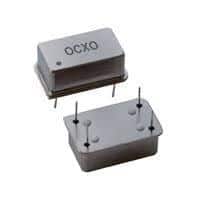
The crystal is placed inside a thermally insulated chamber (or small oven). The oven keeps the crystal at a constant temperature, usually higher than ambient temperature. This minimizes frequency changes caused by environmental temperature fluctuations. OCXO’s provide great perfomance, but are much more expensive than TCXO’s.
Rubidium Oscillator
A rubidium oscillator is a type of atomic clock that uses the natural resonance of rubidium atoms to maintain an extremely stable and precise frequency. It provides a very stable frequency.
Best Holdover Option
Rubidium oscillators provide the best holdover, often maintaining time to within a few nanoseconds per day. However, they are very expensive. For general timing applications, TCXO’s provide a great cost-performance compromise.
It is not recommended to use a NTP server appliance without a stabilised oscillator. In the event of any loss of external timing signals, such as GPS, they will cease to provide timing information to clients. This will lead to each client’s time drifting away from each other at varying rates.
Ethernet Port Speed
A NTP appliance needs an Ethernet port to receive and transmit timing packets to clients. Some NTP devices still use older 10/100 Mbps (Fast Ethernet) ports which can prevent connectivity to the latest network switches. Newer switches often only support modern Gigabit Ethernet (GbE).
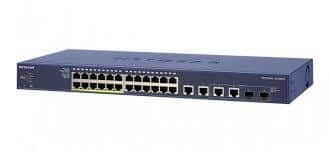
Additionally, due to faster speeds, Gigabit Ethernet allows a larger number of clients to be synchronized much more accurately.
Recommended Ethernet port speed: Gigabit (GbE).
Timing Accuracy
The timing accuracy that can be achieved by a NTP server is largely dependent on its reference clock. The processing power of the server is also a factor.
Most satellite based reference clocks are accurate to a few tens of nanoseconds. Radio based reference clocks, such as MSF and DCF-77 are only accurate to tens of milliseconds.
The processing power of a device allows it to synchronize tightly to a reference clock.
Best option for timing accuracy: Multi-GNSS with a fast 64-bit multi-core processor.
NTP Polling Rate and Maximum Number of Clients
The maximum number of clients that a NTP appliance can serve is also dependent on the power of the devices processor. Faster processors have a higher potential polling rate, thus increasing the number of clients that it can synchronize.
The standard NTP client polling frequency is once every 64 seconds. So even a relatively low speed processor can server a large number of clients.
TimeTools TA610 NTP server has a NTP polling rate in excess of 50,000 NTP requests per second, 3 million per minute. This allows it to serve time to over 50 million network time client computers.
Reducing the client polling rate increases the number of clients that can be served. Newer releases of NTP are utilizing 128 second client polling rates.
Redundancy and NTP Peering
The installation of a fully redundant time system is vital for many organizations.
Many commercial NTP servers have the ability to be peered together. This allows multiple devices to agree time. In the even that a device loses GPS/GNSS signal lock, it can still maintain accurate time from other peered servers.
NTP clients also have the ability to contact multiple servers. In the event that a server develops a fault, the client can automatically switch to a secondary server.
Security
Network security is critical to most organizations. NTP hardware can be installed inside a firewall. Therefore, ports do not need to be left open in the firewall for time synchronization communication. Keeping firewall ports closed reduces the potential of network security breaches.
Many NTP appliances can also implement authentication algorithms to prevent spoofing. Authentication is a mechanism that allows a client to verify the authenticity of a server.
Automatic Leap Second Insertion
NTP time servers should have the capability to correctly insert impending leap seconds. However, some devices require a leap second file to be uploaded before the leap second occurs, to ensure it is inserted correctly.
Most servers, including TimeTools TA-Series devices, correctly warn of and insert leap seconds completely autonomously. No leap second file is required.
Accurately synchronise the time on computers and network infrastructure in your organization with TimeTools TA310 GPS Network Time Server. The TA310 is designed and manufactured in the UK, and provides:
- Advanced, 92 Channel, GPS Receiver For Reliable Reception Of The GPS Satellite System.
- Security-Hardened, Enterprise-Class, Stratum-1 NTP v4 Network Time Server.
- Ultra-Fast, 50,000 NTP Polls Per Second (3M Per Minute), For Precise Client Synchronization.
- High-Stability, Temperature-Compensated Crystal Oscillator (TCXO) For Extended Stratum-1 Operation In The Event Of Any Loss of GPS Signal Lock.
- Network-Optimized Gigabit Ethernet (GbE).
- Powerful, Easy To Use, Web Interface With Command Line Interface For Advanced Users.
- CE and UKCA Compliant With Full EMC and Electrical Safety Test Reports.
Additional Information

| About Andrew Shinton Andrew Shinton is the joint founder and Managing Director of TimeTools Limited. He has a BSc (Hons) degree in Computer Science. Andrew has over 20 years experience of GPS systems and Network Time Protocol (NTP) in the Time and Frequency Industry. |